
Chimpanzees in Uganda: A Fascinating Insight into Our Closest Relatives
Uganda, famously known as the “Pearl of Africa,” is one of the best destinations in the world to observe chimpanzees in their natural habitat. These remarkable primates, sharing about 98–99% of their DNA with humans, offer an incredible window into our evolutionary history. With Uganda’s vast tropical forests and protected reserves, chimpanzees have found a secure environment to thrive. Tourists, researchers, and conservationists alike flock to the country to study and experience the life of these primates. This article explores the physical characteristics, intelligence, diet, communication, social organization, mating, aggression, conservation efforts, and where to see chimpanzees in Uganda.
Physical Characteristics of Chimpanzees
Chimpanzees are medium-sized primates with a strong resemblance to humans in both physical and behavioral traits. They are covered in coarse black or dark brown hair, leaving their faces, ears, palms, and soles bare. Adult males typically weigh between 40 and 60 kilograms, while females range between 27 and 50 kilograms. Standing upright, they can reach about 1.2 meters tall. Their long arms, often longer than their legs, enable them to swing efficiently from tree to tree in a form of locomotion called brachiation.
One of the most striking features of chimpanzees is their expressive faces. They can display a wide variety of emotions through facial expressions, which makes their behavior easily relatable to humans. Their hands are also incredibly dexterous, with opposable thumbs allowing them to use tools with remarkable precision.
Feeding Habits and Intelligence
Chimpanzees are omnivorous and maintain a highly varied diet. They primarily feed on fruits, leaves, seeds, flowers, and stems. However, they are also known to eat insects, small mammals, and occasionally hunt monkeys in coordinated group efforts. This diverse feeding behavior demonstrates not only adaptability but also problem-solving skills.
Intelligence is one of the most fascinating aspects of chimpanzees in Uganda. These primates use sticks to fish termites out of mounds, rocks to crack open nuts, and leaves as sponges to drink water. Such behavior underscores their ability to innovate and pass down learned skills across generations. In many ways, their intelligence reflects the early stages of human cognitive evolution.
Social Life and Organization
Chimpanzees live in complex social structures known as communities, which can number anywhere between 20 and 100 individuals. Within these groups, there is a dynamic hierarchy led by an alpha male. The alpha’s dominance is not only based on physical strength but also on alliances and social intelligence.
Social grooming plays a central role in maintaining bonds. Members of a group spend a considerable amount of time grooming each other, which helps to reduce tension and strengthen relationships. Interestingly, females often wield subtle power by influencing male decisions and maintaining social cohesion.
Communication Among Chimpanzees
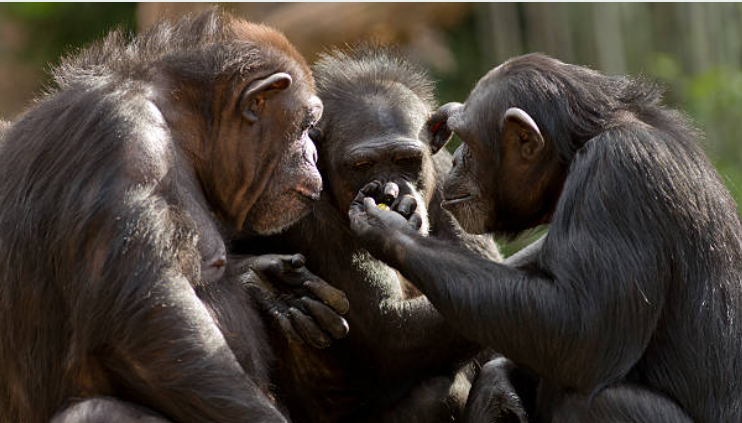
Communication among chimpanzees is rich and multifaceted. They use vocalizations, facial expressions, body postures, and gestures to convey messages. Loud calls, often referred to as “pant-hoots,” can travel long distances through the forest, alerting others to food sources or signaling dominance.
Facial expressions, such as a wide grin or bared teeth, communicate moods ranging from playfulness to aggression. Gestures, like extending an open hand, are commonly used to request food or support. These communication methods highlight their advanced social awareness and ability to interpret complex signals.
Mating and Reproduction
Chimpanzee mating behavior is polygamous, with both males and females engaging in multiple partnerships. Females experience visible estrus cycles, during which their genital swelling signals fertility. This attracts numerous males, leading to increased competition.
The alpha male often has priority access to fertile females, but subordinate males may also form alliances to increase their chances of mating. Pregnancy lasts about 230 days, and a female usually gives birth to a single infant. Mothers are highly nurturing, carrying and nursing their babies for several years. This extended parental care ensures that young chimpanzees learn crucial survival and social skills.
Aggressiveness and Attacks
Despite their playful and intelligent nature, chimpanzees can be highly aggressive. Conflicts often arise over dominance, mating rights, or food resources. Males may engage in violent confrontations, sometimes leading to serious injuries or even death.
Chimpanzees are also known for conducting territorial patrols, during which males move silently along the boundaries of their home range. If they encounter individuals from rival groups, they may attack them. Such acts of aggression serve to expand territory and secure resources for the community. While rare, there have been cases of chimpanzees attacking humans, particularly when they feel threatened or if their habitats are encroached upon.
Conservation of Chimpanzees in Uganda
The survival of chimpanzees in Uganda faces significant challenges, including habitat loss, poaching, and disease. Expanding human settlements and agricultural activities have led to deforestation, reducing the natural habitats of these primates. Additionally, some communities hunt chimpanzees for bushmeat or capture them for the illegal pet trade.
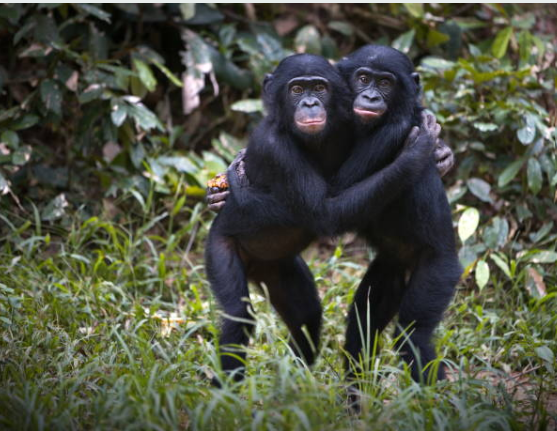
Conservation organizations and the Ugandan government have established strong measures to protect chimpanzees. Protected areas such as Kibale National Park, Budongo Forest Reserve, and Queen Elizabeth National Park serve as safe havens. Ecotourism has also played a crucial role by generating revenue for local communities, encouraging them to value and conserve wildlife. Rehabilitation centers, such as the Ngamba Island Chimpanzee Sanctuary, provide refuge for orphaned and rescued chimpanzees. These efforts ensure that future generations can continue to witness these extraordinary primates in their natural environment.
Where to See Chimpanzees in Uganda
Uganda offers several world-class destinations for chimpanzee tracking and research:
Kibale National Park
Often referred to as the “Primate Capital of the World,” Kibale National Park hosts over 1,500 chimpanzees. Guided chimpanzee tracking tours allow visitors to observe these primates up close in their natural forest environment.
Budongo Forest Reserve
Located within the Murchison Falls Conservation Area, Budongo is famous for its large population of habituated chimpanzees. The forest also offers a rich diversity of bird species and other wildlife.
Queen Elizabeth National Park
The Kyambura Gorge, within Queen Elizabeth National Park, provides a dramatic setting for chimpanzee tracking. The gorge is also home to other primates, making it a unique biodiversity hotspot.
Ngamba Island Chimpanzee Sanctuary
Situated on Lake Victoria, Ngamba Island is dedicated to the care of rescued and orphaned chimpanzees. Visitors can learn about rehabilitation programs and support conservation efforts through eco-volunteering and educational tours.
Chimpanzees in Uganda represent one of the most captivating wildlife experiences on the African continent. Their intelligence, complex social life, and close genetic link to humans make them both fascinating and essential to study. While they face threats from human activity, strong conservation efforts have ensured that Uganda remains one of the best places to see and protect them. For tourists, researchers, and wildlife enthusiasts, visiting Uganda’s chimpanzees is not only an unforgettable adventure but also a step towards preserving a species that mirrors so much of ourselves.